
Wearable technology promises a seamless digital lifestyle, but strapping close-proximity digital viewfinders to your face presents a real biological challenge for the human eye. Balancing sleek, modern frame designs with long-term optical health requires separating Silicon Valley marketing claims from the biological realities of how our eyes process light, glare, and micro-displays.
The Intersection of Style and Ocular Strain
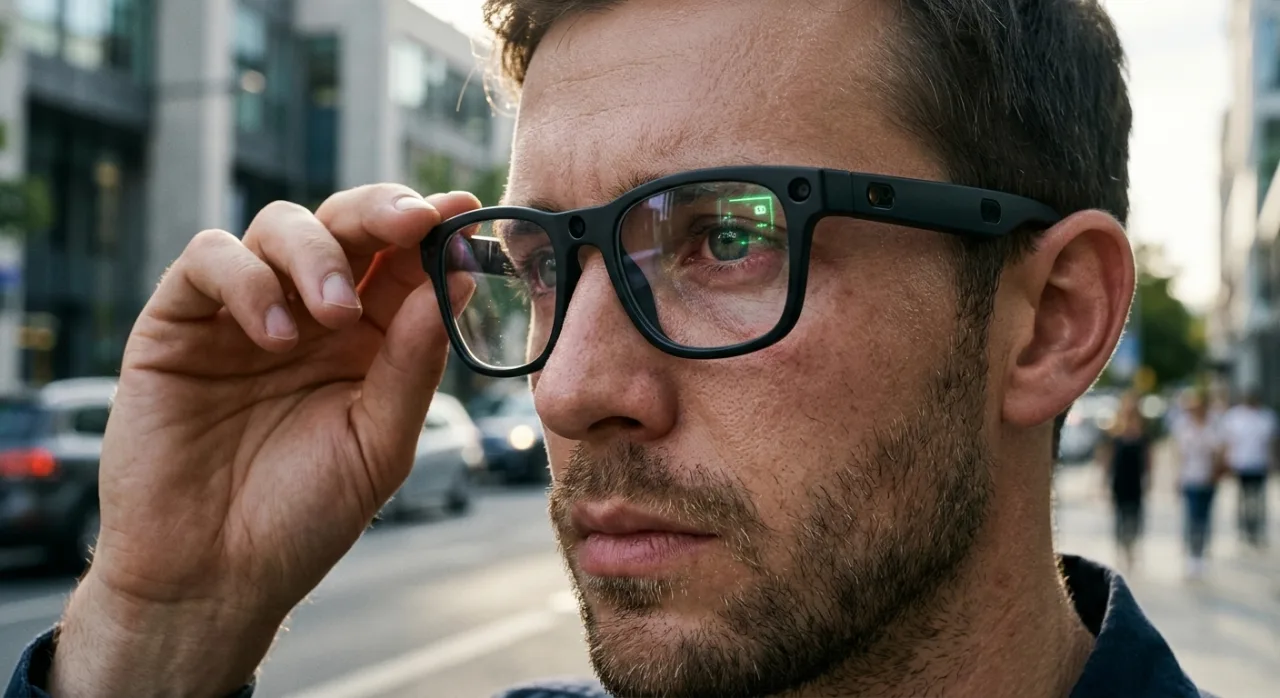
The eyewear industry continually blends retro fashion trends with aggressive technological updates. AI glasses feature embedded cameras, micro-speakers, and heads-up displays designed to merge augmented reality with everyday style.
However, introducing a battery-powered light source within an inch of the cornea alters fundamental visual mechanics. The human visual system relies on a delicate balance of moisture, muscle relaxation, and ambient light filtration. High-tech frames split your focal plane, forcing your ciliary muscles to constantly micro-focus between a digital overlay and your physical environment.
| Biological Metric | Standard Visual State | AI Glasses / Digital Viewfinder State | Physiological Result |
| Blink Rate | ~15 blinks per minute | ~5 blinks per minute (66% drop) | Accelerated tear evaporation & lipid layer degradation |
| Focal Plane | Single, natural ambient distance | Split (micro-display vs. physical world) | Ciliary muscle fatigue & persistent tension headaches |
| Sclera Response | Normal capillary pressure | Vasodilation (expanded blood vessels) | Chronic eye redness from tear osmolarity imbalance |
| Pupil Reflex | Stable ambient adjustment | Continuous contraction/dilation | High retinal strain from back-glare and blue light exposure |
According to clinical observations from the University of Iowa Hospitals & Clinics, staring at digital interfaces drops a person’s blink rate by 66%. With reduced blinking, tear films evaporate, friction increases, and chronic irritation sets in.
+-----------------------------------------------------------------------+
|                       THE OCULAR STRAIN CYCLE                         |
|                                                                       |
|  [ In-Lens Display ] ---> [ 66% Lower Blink Rate ] ---> [ Dry Cornea ] |
|          ^                                                   |        |
|          |                                                   v        |
|  [ Micro-Focus Fatigue ] <--- [ Muscle Strain ] <--- [ Vasodilation ] |
+-----------------------------------------------------------------------+
What Actually Causes Eye Irritation?
Screens are only part of the problem; disrupted tear film dynamics and constant micro-focusing cause the majority of visual fatigue.
The chronic redness associated with long screen sessions is medically known as vasodilation. Blood vessels on the sclera expand to deliver oxygen to an oxygen-deprived, dry ocular surface. While common perception blames fatigue or late nights, understanding the mechanics behind debunking the red eye myth confirms that persistent redness stems directly from tear osmolarity imbalances rather than mere lack of sleep.
Combating Glare and UV Light Effectively
As wearable computers become more prevalent, tech-enabled frames must incorporate legacy optical protections. A digital display is useless if ambient solar glare blinds you before you can read a notification.
Unfiltered sunlight creates horizontal light waves that bounce off flat surfaces such as asphalt, water, and car hoods. This glare triggers constant squinting, accelerating facial muscle fatigue and degrading visual contrast.
-
Light Polarization: Chemical films on polarized lenses act as microscopic blinds, blocking horizontal glare while allowing clean vertical light to pass.
-
UV400 Protection: The World Health Organization reports that prolonged UV exposure causes 20% of cataracts globally. Comprehensive UV protection blocks 100% of UVA and UVB rays, preventing cumulative damage that begins early in adult life.
Without proper light filtration, investing in polarized sunglasses remains an essential requirement for anyone wearing tech-integrated frames outdoors.
The Impact of Screen-Heavy Living on Vision
Micro-displays rely on high-brightness LEDs that emit high-energy, short-wavelength blue light. In nature, blue light from the sun regulates circadian rhythms by suppressing melatonin during daylight hours. Wearing AI glasses indoors or late at night delivers daytime wavelengths directly into the retina.
Research from Harvard Medical School demonstrates that screen-emitted blue light suppresses melatonin production twice as long as other light wavelengths, shifting circadian rhythms by up to three hours. This disruption impacts sleep quality, leading to dry eyes and daytime fatigue.
While many consumers buy clear blue-light blocking coatings, standard clear coatings block only 10% to 20% of target wavelengths. True high-percentage blue light filtration requires amber or red tints, which are rarely integrated into commercial smart frames due to fashion preferences.
How to Optimize Your Eyewear Choice
Treat your eyes as vital organs rather than background platforms for consumer technology. When selecting tech-integrated frames or upgrading custom lenses, enforce strict purchasing criteria:
-
Demand 100% UV400 Protection: Ensure the spec sheet explicitly states complete UVA/UVB blocking.
-
Require Anti-Reflective (AR) Coatings: In-lens displays create back-glare. AR coatings eliminate internal reflections, preventing your eyes from tracking their own reflections.
-
Choose Polycarbonate or Trivex Lenses: High-tech frames need lightweight, impact-resistant lens materials that do not shatter or add unnecessary weight.
-
Apply the 20-20-20 Rule: Data from The Vision Council indicates that 59% of adults experience digital eye strain. Every 20 minutes, focus on an object 20 feet away for 20 seconds to allow ciliary muscles to fully relax.
Proprietary color-tuning technologies (such as high-contrast lens tints) enhance color perception by filtering overlapping light wavelengths. While they improve clarity and aesthetic sharpness, they must be combined with UV400, polarization, and AR coatings to provide total optical protection.
The Final Verdict on Wearable Optics
AI glasses offer clear functional and informational advantages, but they demand deliberate optical care. Hardware manufacturers prioritize user engagement and sleek industrial design over long-term visual health.
Protecting your vision requires demanding physical lens protections. Integrating digital viewfinders into your daily life without polarized, anti-reflective, and UV400 lens standards accelerates visual fatigue. Prioritize proven optical physics over marketing promises to protect your vision long-term.