
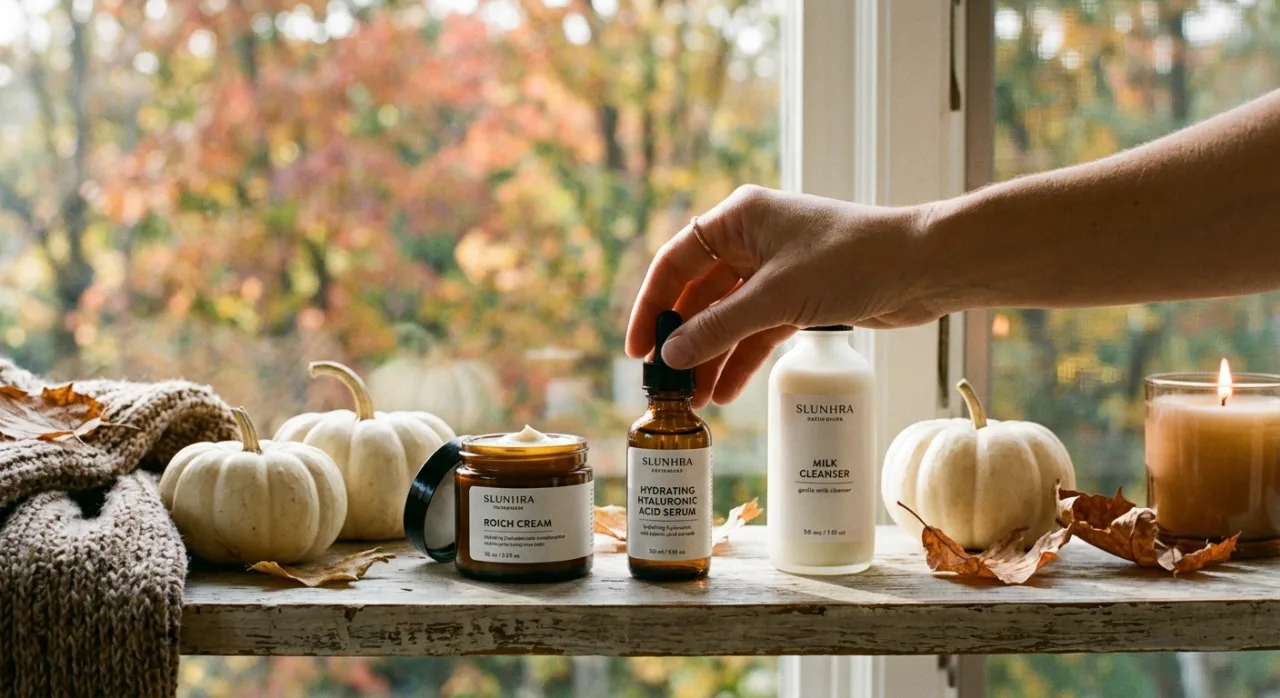
 As summer fades and cooler temperatures arrive, environmental changes directly impact your skin barrier. Dropping outdoor temperatures, lower humidity, and indoor heating combine to deplete natural moisture, leading to dryness, irritation, and a dull complexion. Transitioning from a lightweight summer regimen to a nourishing autumn routine protects your skin against seasonal stressors and maintains a resilient, glowing moisture barrier.
Assessing Seasonal Skin Changes
The sudden drop in temperature during autumn causes a natural reduction in sebum production while accelerating transepidermal water loss. Skin that felt balanced or slightly oily during warmer months frequently becomes tight, flaky, or sensitive as ambient moisture drops.
Observing how your skin behaves after cleansing or after spending time outdoors gives you immediate feedback on whether you need additional lipid support or gentler cleansing agents. Recognizing these early warning signs allows you to make timely adjustments before winter sets in.
Seasonal Product Adjustments at a Glance
Transitioning your skincare routine from summer to autumn requires shifting focus from oil control and light fluids to deep hydration, lipid replenishment, and barrier protection:
| Routine Step | Summer Focus | Autumn Adjustment | Primary Benefit |
| Cleanser | Gel or foaming formulas | Cream, milk, or oil-based cleansers | Preserves the natural lipid barrier |
| Exfoliant | High-strength BHA / frequent scrubs | Mild AHA (lactic or mandelic acid) 1–2x weekly | Gently sloughs dull cells without drying |
| Serum | Lightweight or oil-free serum | Hydrating humectants (Hyaluronic Acid, Glycerin) | Draws deep moisture into the epidermis |
| Moisturizer | Fluid lotions or gel creams | Richer barrier creams with ceramides & fatty acids | Locks in hydration and prevents water loss |
| Sunscreen | Water-resistant, matte-finish SPF | Hydrating broad-spectrum SPF 30+ | Maintains daily defense against UVA/UVB rays |
Upgrading Cleansing Habits
Harsh cleansers that strip natural oils exacerbate autumn dryness and disrupt the delicate lipid barrier.
-
Switch to Gentle Cleansers: Replace foaming or gel cleansers with hydrating milk cleansers, gentle cream formulas, or oil-based cleansers. Cleansing should leave your face feeling comfortable, soft, and calm never tight or squeaky clean.
-
Control Water Temperature: Always use lukewarm water instead of hot water. Hot showers and hot facial washing strip away protective lipids and accelerate moisture evaporation.
Gentle cleansing preserves your skin’s natural pH, minimizes friction, and prepares the skin surface to absorb subsequent hydrating layers.
Layering Lightweight Hydration and Barrier Support
Autumn skincare relies heavily on multi-layered moisture retention rather than relying strictly on heavy occlusives:
-
Apply Humectants to Damp Skin: Incorporate hydrating serums containing humectants like hyaluronic acid, glycerin, or polyglutamic acid. Applying these to slightly damp skin maximizes their water-binding capacity, providing immediate plumping benefits.
-
Seal with Barrier Creams: Follow hydration with a nourishing moisturizer to lock in water and protect against chilly winds and indoor heat. Look for formulations containing ceramides, cholesterol, and essential fatty acids, which mirror the natural lipid structure of healthy skin.
Refining Exfoliation Frequency and Techniques
While summer sun exposure creates a buildup of dead skin cells that requires exfoliation to restore radiance, over-exfoliating during cooler months quickly compromises the skin barrier.
-
Choose Mild Acids: Transition from aggressive physical scrubs or high-strength clarifying acids to gentler chemical exfoliants. Low concentrations of alpha-hydroxy acids (AHAs), such as lactic or mandelic acid, provide effective surface renewal alongside humectant benefits.
-
Reduce Frequency: Limit exfoliation to once or twice a week. This maintains smooth texture and improves product absorption without causing redness, stinging, or increased sensitivity.
Prioritizing Daily Sun Protection Year-Round
Ultraviolet rays remain a significant environmental stressor throughout autumn and winter, even on overcast days. While UVB rays (responsible for sunburn) weaken in colder weather, UVA rays remain consistent year-round. UVA rays penetrate clouds and glass, contributing to premature aging, hyperpigmentation, and collagen breakdown.
Apply a broad-spectrum sunscreen with at least SPF 30 as the final step of your morning routine. Modern autumn sunscreens frequently incorporate added moisturizers and antioxidants. Mineral sunscreens containing zinc oxide or titanium dioxide offer an extra physical shield against brisk autumn winds while safeguarding against UV damage.
Supporting Skin Through Lifestyle and Environmental Habits
Topical products perform best when supported by healthy internal habits and environmental adjustments:
-
Hydrate Internally: Drink adequate water throughout the day to support cellular hydration, even when lower temperatures diminish your natural thirst cues.
-
Eat Healthy Fats: Incorporate dietary fats rich in omega-3 fatty acids such as salmon, walnuts, chia seeds, and flaxseeds to reinforce the skin’s lipid matrix from within.
-
Use a Humidifier: Indoor heating significantly lowers humidity levels and drains moisture from your skin. Operating a cool-mist humidifier in your bedroom or workspace maintains optimal ambient humidity, reducing dryness and supporting your skin’s protective barrier.