
Biker slang is the informal language motorcyclists use for bikes, riders, gear, and the road. A few terms you will hear almost right away: a cager is someone driving a car, a squid is a reckless rider without proper gear, a lid is a helmet, and twisties are curvy roads. A trailer queen is a bike that spends more time on a trailer than on the road. Most of these words are friendly shorthand, but a few are mild insults, so it helps to know the difference.
Motorcycle culture in the United States has its own distinct vocabulary. Some expressions have roots in clubs, garages, and racing communities, while newer terms have spread through internet forums, group chats, and conversations at roadside stops.
You do not need to use this vocabulary yourself. But if you have just purchased your first motorcycle, you will hear it at repair shops, rallies, and group rides. Knowing the definitions makes it easier to follow the conversation.
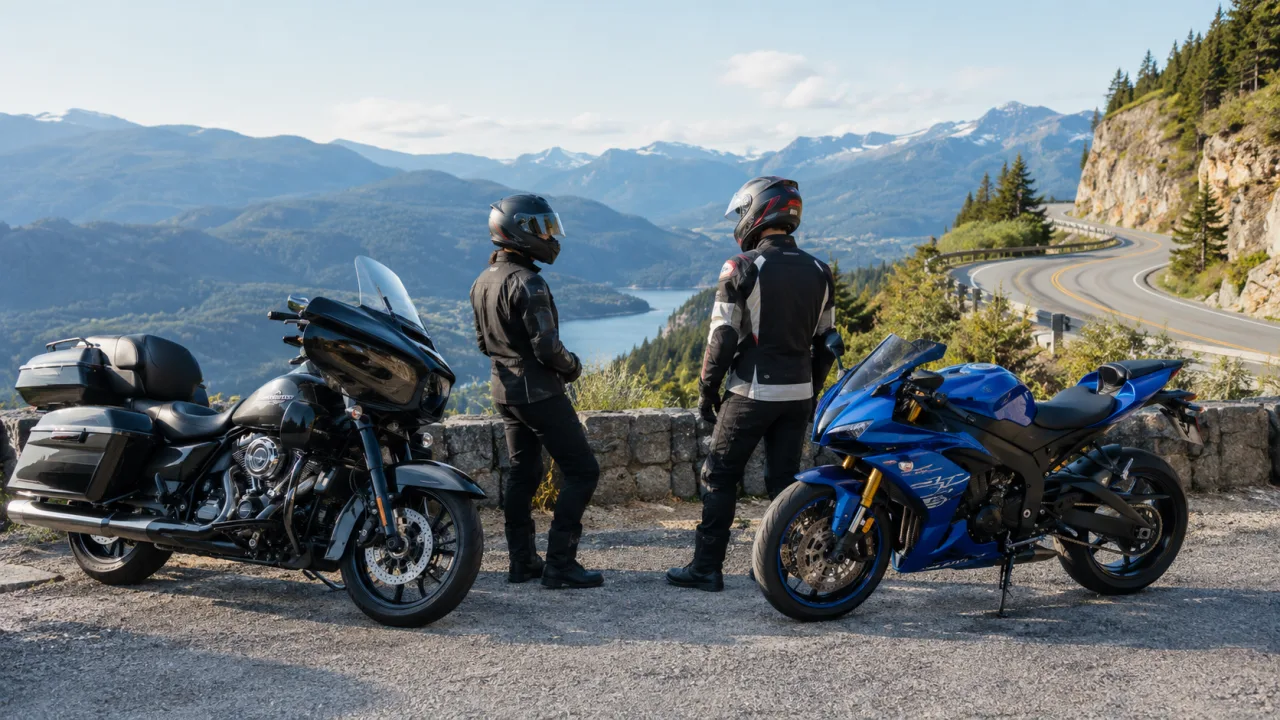
Words for Cars and the People in Them
Cage. A car, truck, or other enclosed vehicle. From the perspective of a rider sitting in the open air, the people inside are surrounded by a protective box.
Cager. The person driving the cage. Riders often use this term with annoyance, particularly after a motorist changes lanes without checking blind spots or signaling.
Four-wheeler. In some riding conversations, this means a car or another four-wheeled road vehicle. It also commonly means an ATV, so context matters.
Words for Riders
Squid. A rider who shows off recklessly or rides aggressively while wearing inadequate protective gear, such as shorts, sneakers, and no jacket. The term is not a compliment and is often associated with sport-bike riders, though it is not limited to them.
Wrench. A skilled mechanic or a rider with strong mechanical ability. Calling someone a “good wrench” is high praise.
Iron butt. A rider who covers long distances with little extended rest. The Iron Butt Association certifies endurance rides such as the SaddleSore 1000, which requires completing 1,000 miles within 24 hours under its documentation and verification rules.
Weekend warrior. Someone who mainly rides on weekends, often when the weather is good. Depending on the tone, it can be a neutral description or a mild jab.
Pillion. The passenger riding behind the operator, or the seat they occupy. Riding with a passenger is called riding two-up.
Words for Bikes
Hog. A nickname for a Harley-Davidson motorcycle. The manufacturer embraced the association with its Harley Owners Group, known as H.O.G.
Crotch rocket. A sport bike associated with high performance and an aggressive, forward-leaning riding position. Some riders use the term affectionately; others use it teasingly.
Bagger. A motorcycle equipped with saddlebags, especially a cruiser or touring bike with hard bags. Many baggers also have a front fairing and windshield, but those features are not required for the label.
Rat bike. A motorcycle kept running with inexpensive repairs and whatever suitable spare parts are available. Weathered finishes and mismatched components are common features. The rough appearance is part of the style, but safety-critical parts still need proper repairs.
Garage queen. A pristine motorcycle that rarely leaves the garage. It is kept meticulously clean and admired more often than it is ridden.
Trailer queen. A motorcycle transported to shows or rallies on a trailer or truck bed rather than ridden there.
That last term is often a lighthearted joke, but transporting a motorcycle can be entirely practical. Riders ship bikes when relocating, buying from a seller several states away, or planning a one-way trip.
Motorcycle shipping can also avoid adding thousands of miles to the bike. Depending on the equipment and service, transporters use wheel chocks, soft tie-downs, dedicated cradles, or other securement systems. Ask how your motorcycle will be loaded and secured rather than assuming every carrier uses the same method.
Words for Parts and Gear
Lid. A motorcycle helmet. Brain bucket means essentially the same thing.
ATGATT. Short for all the gear, all the time. It means wearing a helmet that meets applicable safety standards, a protective jacket, riding gloves, protective pants, and proper boots on every ride.
Ape hangers. Tall handlebars that place the rider’s hands at or above shoulder level.
Sissy bar. A vertical support behind the passenger seat, often fitted with a backrest pad. It can also provide an attachment point for luggage.
Farkle. An aftermarket motorcycle accessory, especially one that adds useful features or personal flair. Examples include heated grips, device mounts, and auxiliary lighting. The word is often explained as a blend of “function” and “sparkle,” though its origin is not firmly established.
Chicken strips. The less-worn bands along the outer edges of a motorcycle tire. Riders sometimes tease each other about them, but they are not a reliable measure of skill or safe riding. Tire profile, road conditions, bike geometry, and riding style all affect how much of the tread gets used. There is no need to chase greater lean angles to remove them.
Words for the Road and Riding
Twisties. Curvy, winding roads—the routes many motorcyclists seek out for weekend rides.
Slab. An interstate or other major highway, especially a long stretch of relatively straight road. Saying you “took the slab home” means you chose the highway over a more winding route.
Lowside and highside. Two types of motorcycle crashes. In a lowside, the bike loses traction and falls toward the inside of the turn. A highside often happens when the rear tire slides and then abruptly regains traction, throwing the rider over the bike. Highsides can be particularly violent.
Road rash. Skin abrasions caused by sliding across the road during a crash. Abrasion-resistant riding gear helps reduce the risk and severity of these injuries.
The biker wave. A greeting exchanged between passing motorcyclists, often with the left hand extended low beside the bike. Not every rider participates, and traffic or road conditions can make waving impractical. Keeping control of the motorcycle comes first.
Rubber side down. A parting phrase that means “ride safely.” It refers to keeping the tires on the road and the motorcycle upright.
A Few Terms You Will Hear When Buying or Moving a Bike
These are buying and transport terms rather than biker slang, but new riders may encounter them.
Clean title. A title without a salvage, rebuilt, or similar brand. A clean title does not guarantee that a motorcycle has never been damaged, and it is not the same as a title free of liens. Check the title status, vehicle identification number, ownership details, and any outstanding liens before buying.
Out-of-state buy. Purchasing a motorcycle in another state. Online listings make it easier to find bikes far from home, but registration, taxes, and transport arrangements still need attention.
Bill of Lading. A transport document that identifies the shipment and records its receipt by the carrier. Motorcycle transport paperwork often includes a condition report, either within the Bill of Lading or as a separate document. Review the condition record at pickup and delivery, and document any discrepancies before signing.
If you are buying a motorcycle far from home or relocating across the country, compare transport quotes and service details before committing. Some providers are brokers who arrange transport through independent carriers; others operate their own equipment.
Ask:
- How will the motorcycle be loaded and secured?
- Is the service open or enclosed?
- Who will physically transport the bike?
- What cargo insurance applies, and what exclusions or deductibles are involved?
- What are the pickup and delivery windows?
- Are there additional fees or storage charges?
An unusually low quote deserves closer scrutiny, but price alone does not establish whether a service is reliable. Look for clear terms, realistic scheduling, and a straightforward explanation of who will handle your motorcycle.
FAQ
What does cager mean in biker slang?
A cager is a car driver. Motorcyclists call enclosed vehicles “cages,” which is where the term comes from.
What is a squid?
A squid is a rider known for reckless behavior or aggressive riding with inadequate protective gear. The term is often associated with sport-bike riders, but it can apply to anyone riding that way.
What does trailer queen mean?
A trailer queen is a motorcycle transported by trailer or truck more often than it is ridden, particularly to shows or rallies. The term is usually teasing, though transporting a bike can be a practical choice.
What does rubber side down mean?
It means “ride safely.” The phrase is a reminder to keep the tires on the road and the motorcycle upright.