
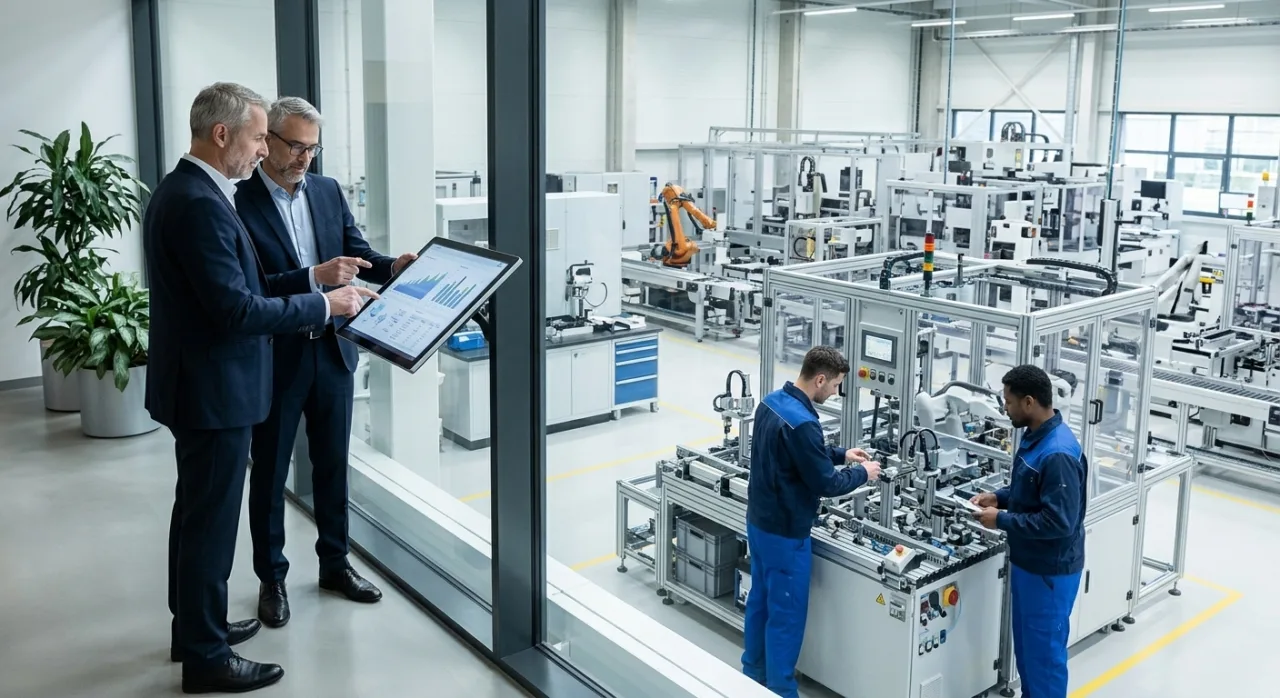
 Most executive teams treat corporate real estate and technical workforce development as if they belong on completely different planets. Facilities sit quietly under administrative overhead, while technical training remains hidden inside departmental operational expenses.
This separation is an expensive mistake. A balance sheet review of a mid-sized manufacturing group revealed a classic contradiction: the enterprise spent $2.8 million modernizing executive suites with Italian marble, acoustic paneling, and designer lighting, while the finance committee simultaneously rejected a $45,000 allocation to upskill on-site equipment handlers. Three weeks later, an uncalibrated sorting system on the packaging floor shut down operations for forty-eight hours, vaporizing $190,000 in missed shipping guarantees.
Capital allocation is not just about cash reserves; it is about ensuring capital speaks a unified language across the entire enterprise. A glass atrium will not protect quarterly earnings when assembly lines stall, nor will top-tier technical talent save an organization if dilapidated offices deter prospective business partners. Both domains demand deliberate, disciplined funding.
Protecting Corporate Real Estate Value Through Upstream Maintenance
Facility expenses spiral out of control when management views daily upkeep as a nuisance rather than an investment in asset preservation. An audit of commercial office leases revealed that 65% of unexpected end-of-lease dilapidation charges stem directly from delayed surface care and irregular sanitation routines.
Neglect Accumulation Timeline:
[Poor Daily Sanitation] ➔ [Polymer Coat Stripping] ➔ [Matted Carpets & Hardwood Degradation] ➔ [Leasehold Depreciation / End-of-Lease Penalties]
For companies running headquarters in dense commercial districts, service procurement directly impacts physical asset valuation:
-
Targeted Asset Care: Contracting dedicated commercial cleaning Melbourne CBD services upholds environmental standards across corporate floors while extending the functional lifespan of high-value architectural fixtures.
-
Vendor Accountability: Negotiate maintenance vendor contracts based on surface longevity metrics rather than selecting the lowest tender on a procurement spreadsheet. Cheap cleaning solvents strip protective coatings off engineered stone, and hurried vacuuming wrecks acoustic floor tiles.
-
Energy Management Gains: Clean, well-regulated air ducts reduce the mechanical load on commercial chillers, shaving 7% to 12% off monthly utility consumption.
Breaking the Expensive Reliance on External Contractors
Modern facilities and production floors depend on complex networks of programmable logic controllers, pressure transmitters, and digital flow meters. Yet executive boards routinely starve the technical teams responsible for maintaining these systems.
The Accounting Bias Dilemma
Standard accounting rules classify machinery as a capital asset depreciated over seven years, while treating worker education as an immediate overhead expense that hits the current month’s operating margin. This bias drives poor operational habits:
| Allocation Category | Executive Action | Operational Outcome |
| Automated Hardware | Approves $800,000 for automated sorting systems without hesitation. | System installed, but internal team lacks calibration expertise. |
| Technical Upskilling | Rejects $12,000 to train senior operators on optical sensor calibration. | Sensors drift out of tolerance within three months, halting production. |
The High Cost of Emergency Service Calls
When technical teams lack diagnostic training, plant managers must rely on external Original Equipment Manufacturer (OEM) technicians:
-
Hourly Billing Rates: Specialized field technicians bill $220 to $350 per hour, plus travel expenses and emergency dispatch premiums.
-
Costly Downtime Case Study: A regional cold-storage facility lost three full days of refrigerated throughput because an outside contractor could not fly a technician to the site until mid-week.
-
Emergency Vendor Invoice: $18,400
-
Lost Inventory & Idle Labor: Past $70,000
-
Total Financial Impact: $88,400+
-
Forward-thinking organizations avoid these losses by sponsoring capable technicians to complete an accredited instrument technician course. Teaching internal staff to read loop diagrams, troubleshoot circuits, and calibrate sensors ensures that when a critical sensor drifts at 2:00 AM on a Friday, an internal specialist resolves it in twenty minutes without emergency vendor calls or plant shutdowns.
Aligning Physical Assets with Diagnostic Capability
Unifying physical plant upkeep and internal skills development requires breaking down the departmental silos separating facilities directors from engineering managers.
Actionable Steps for Executive Leadership:
-
Conduct Unified Asset Reviews: Combine facilities overhead and technical training budgets into a single quarterly review to make operational trade-offs transparent.
-
Audit Vendor Invoices: Review the past 12 months of third-party contractor invoices for routine calibration and diagnostic calls, and weigh that spending against the cost of building internal technical competence.
-
Review Commercial Leases: Inspect real estate agreements to ensure baseline facility maintenance contracts protect long-term property values and prevent end-of-lease dilapidation fees.
Balancing capital between physical infrastructure and diagnostic capability creates an operation that looks credible to investors on paper and performs reliably on the ground every day.