
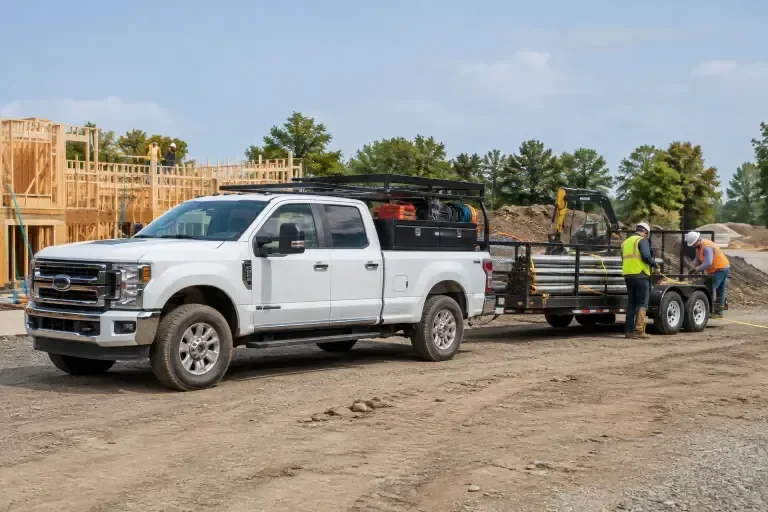
A productive work truck is built around the jobs it performs, rather than appearance alone. Whether it supports a contractor, landscaper, delivery driver, utility crew, or mobile repair technician, the right setup should make loading, driving, unloading, and securing equipment simpler.
Start by Identifying the Daily Problems the Truck
Start by identifying the daily problems the truck needs to solve, then choose equipment that supports those needs.
List every item carried on a normal day, including tools, parts, materials, safety gear, and job-specific equipment. Also note where time is lost. A repair crew that repeatedly searches for hand tools may benefit from putting those tools in labeled, rear-accessible storage, while rarely used equipment can stay farther forward.
Consider routes, parking restrictions, trailer use, weather, rough ground, and the number of people who use the truck. Separate everyday cargo from occasional items so the bed and cab are not burdened with unnecessary weight.
Payload is the weight the truck can carry, while towing capacity addresses the trailer it can pull. Gross vehicle weight rating is the manufacturer’s maximum loaded vehicle weight. Toolboxes, racks, covers, passengers, fuel, materials, and trailer tongue weight all affect the load carried by the truck.
Place dense items low, balance weight from side to side, and keep cargo from sliding. According to National Highway Traffic Safety Administration reports, crashes involving objects in the road kill about 850 people and injure nearly 19,000 people each year, highlighting the serious risk of unsecured road debris.
Organization protects tools and reduces wasted movement. Lockable boxes, drawer systems, small-parts bins, vertical racks, covered bed space, and dedicated tie-down points can all serve a purpose when selected for the actual workflow.
To maintain simple organization, give each tool and supply a fixed location, keep heavy equipment low and near the truck’s center, put daily-use items within easy reach, label bins and compartments clearly, and secure every loose item before driving.
Hitch Is Not a One-size-fits-all Upgrade
A hitch is not a one-size-fits-all upgrade. Match the hitch, coupler, safety chains, wiring, brake controller, and other equipment to the loaded trailer and the truck’s factory ratings. The equipment cannot increase the truck’s rated payload or towing capacity.
Before towing, confirm the loaded trailer weight, tongue weight, brake requirements, and likely road conditions. For interstate commercial operations, Federal Motor Carrier Safety Administration cargo securement rules also address how loads must be restrained from shifting or falling.
Protection should match the work environment. Bed protection can help with tools and abrasive materials. Covers can shield weather-sensitive cargo and reduce tool visibility. Ladder or cab-protection systems can help manage long materials, while steps can make repeated entry and exit easier.
Every addition has trade-offs. Extra equipment adds weight, may affect clearance or visibility, and can reduce the payload remaining for work materials.
Review mirrors, cameras, exterior lighting, steps, door clearance, warning equipment, and wiring routes. The setup should not obstruct windows, sensors, trailer access, or normal vehicle controls. Trucks operating near traffic also need clear visibility and a predictable place for workers to move around the vehicle.
Confirm the truck’s year, make, model, cab style, bed length, tire size, and factory equipment before ordering components. Check tailgate movement, tire clearance, exhaust clearance, camera locations, hitch access, electrical capacity, and fuse protection.